
I rescued a broken rain barrel (with a crack at the bottom) from my mother’s compulsive need to discard everything — a compulsion, btw, that is the exact opposite of that of my paternal step-grandfather, who needed to save everything because it surely would come in handy one of these days (and it usually did, he was very popular around our neighbourhood — keep in mind that in East Germany, you usually couldn’t just go to a store to buy what you needed). In this family, we don’t do things by halves. But I digress.
I rescued the rain barrel because I thought it would be perfect for a particular someday-maybe project of mine. I have lots of those, including keeping chickens (as my grandmother once did on this very property), which, for the time being, is being met with resistance from the husband. I don’t want to eat the chickens, of course, and not even necessarily the eggs (I haven’t eaten eggs in the past 13 months), I just really like chickens. But I digress again. (Note to self: Albet i Noya’s yummy tempranillo may be vegan but it does contain alcohol.)
Where were we? Right, the rain barrel. The idea was to try and grow potatoes as described here. To make it more fun, I wanted to use a heritage variety but since I was late getting started, the selection was very limited. I eventually settled on a kind called Reichskanzler (with a name like that, you know it wasn’t cooked up in a Monsanto lab recently).
In addition to the crack that was already at the bottom, I had the husband drill a few more holes into the bottom of the barrel and also put the barrel on a couple of bricks we had lying around for better drainage. The bottom of the barrel was filled with dried leaves from our birch and a bit of soil from the compost. I put the potatoes into the rain barrel on May 17th: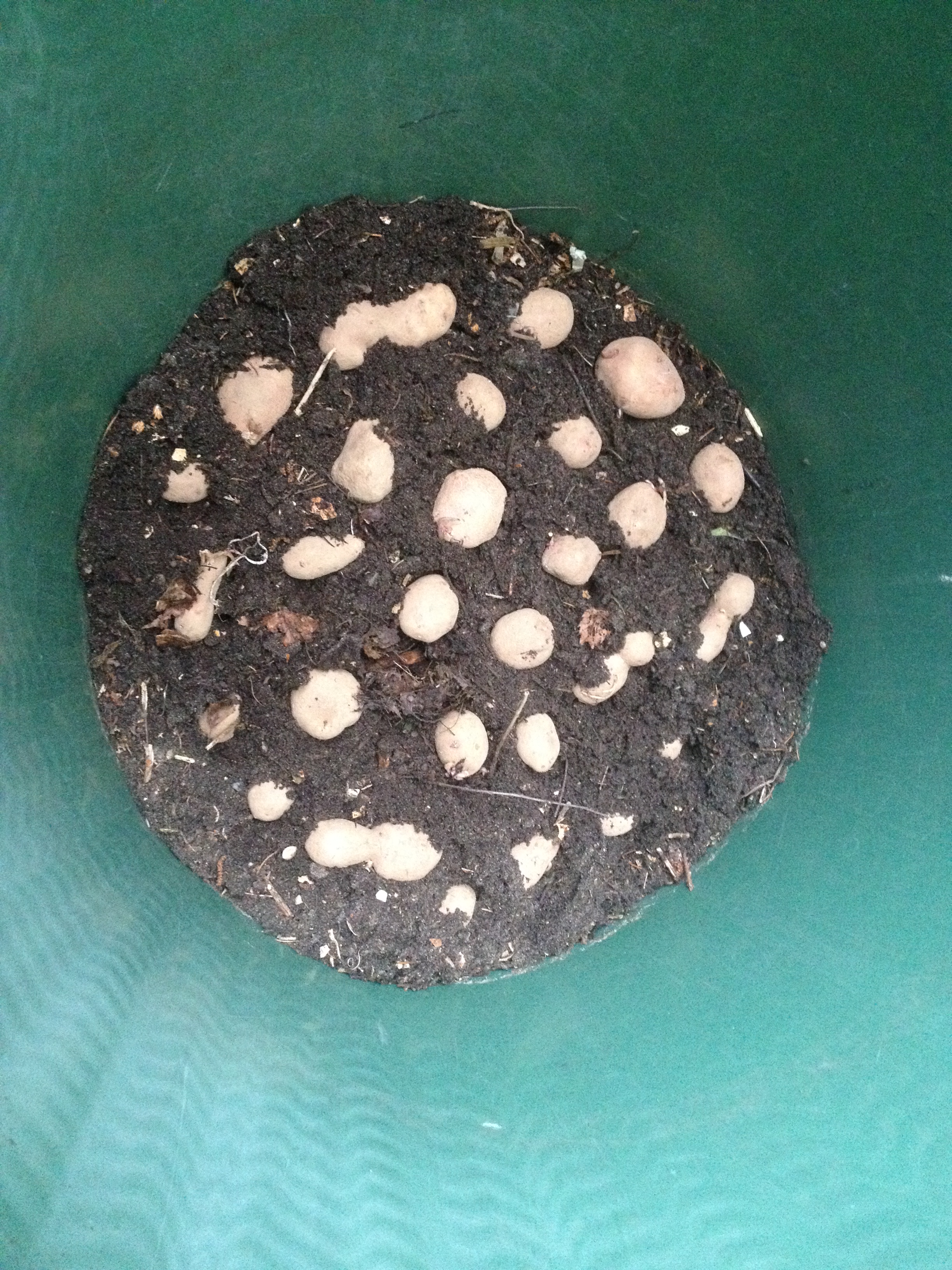 First signs of life on May 28th:
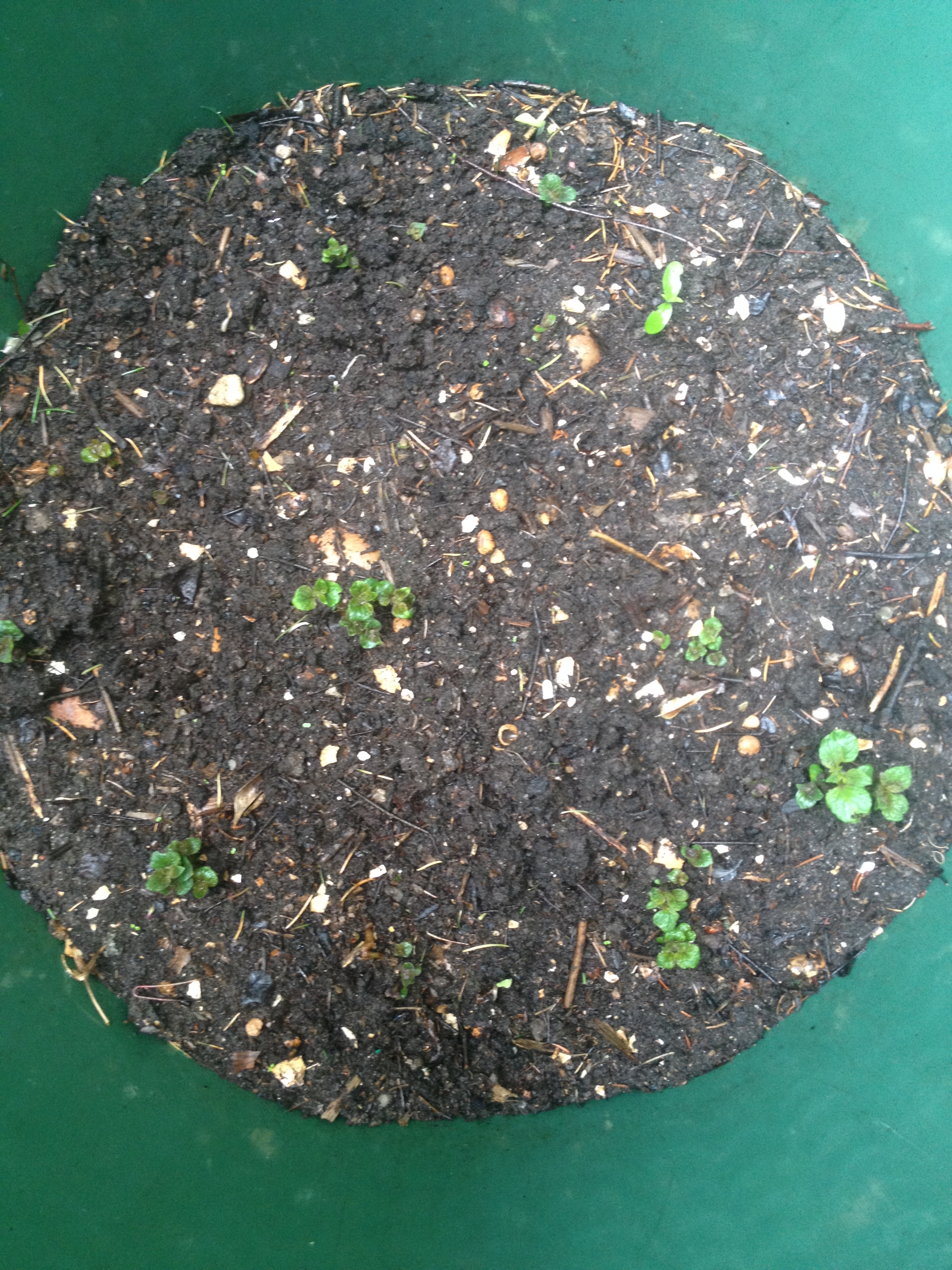
May 31st:

June 4th:
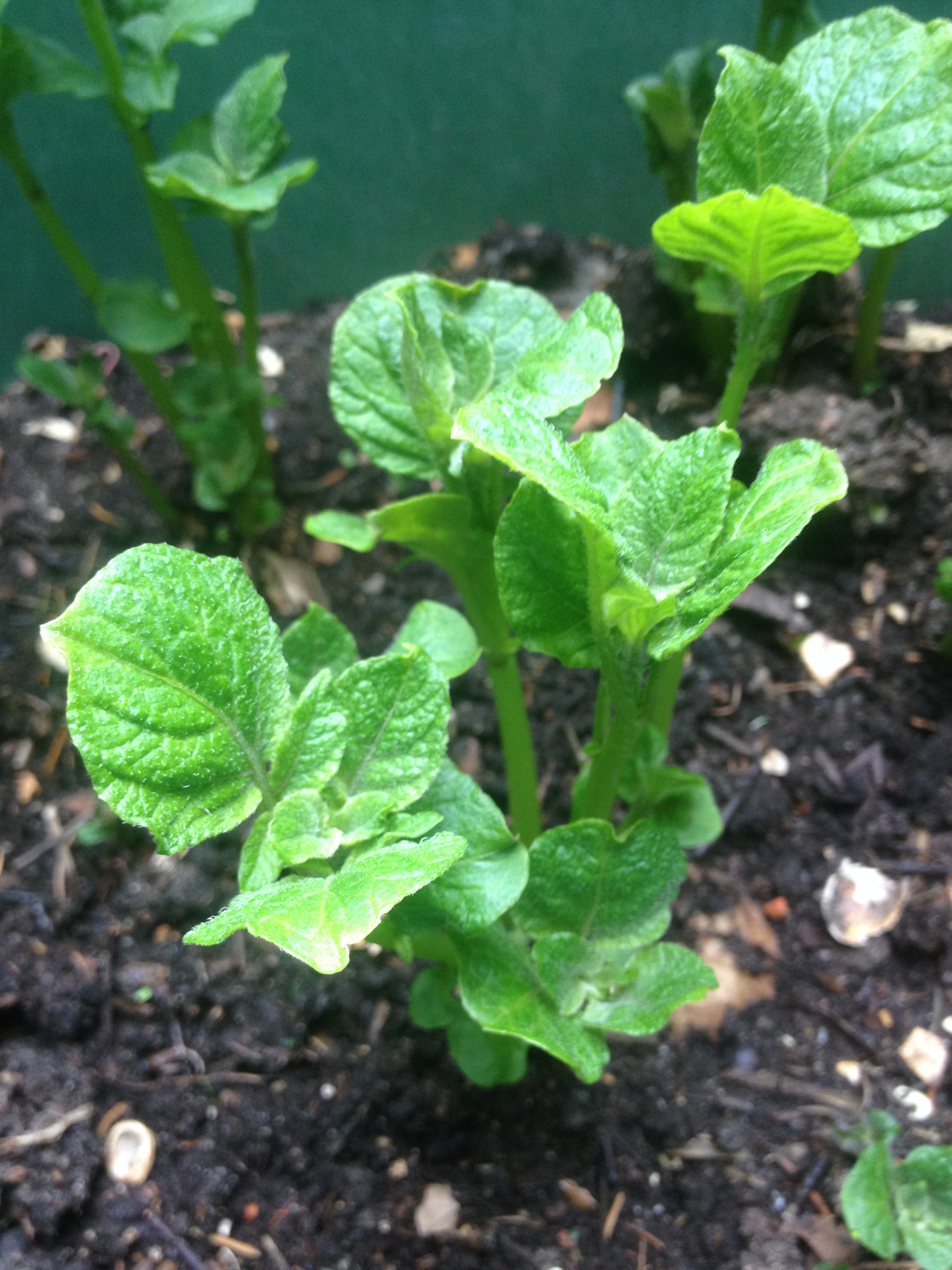 Today:
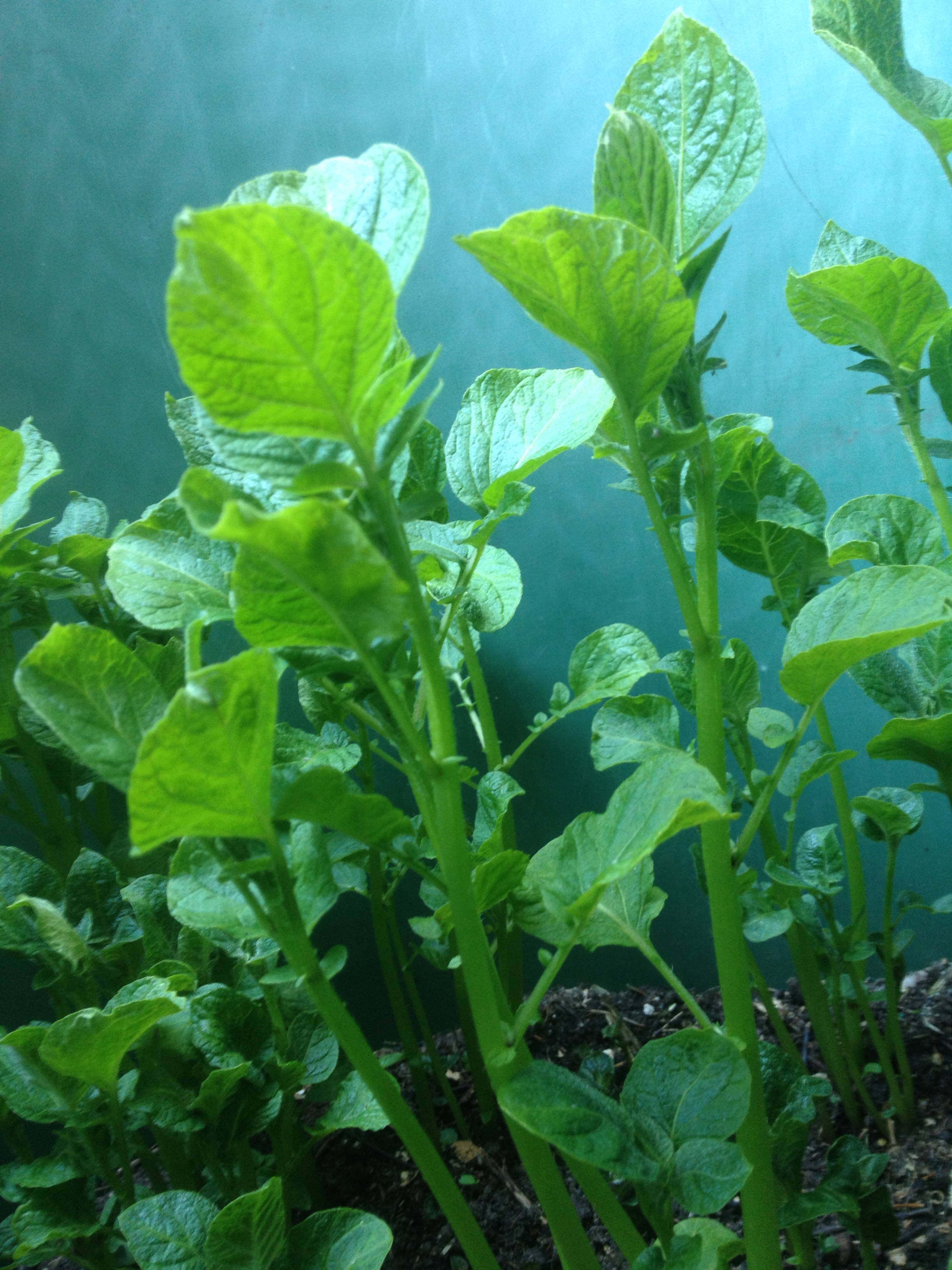 I’ve now covered about half of this growth with additional soil from the compost and will keep doing so over the summer. The idea is that the plants will grow a new layer of potatoes in each layer of soil. We’ll see if that works — I’ll report back.
 Walking the cat