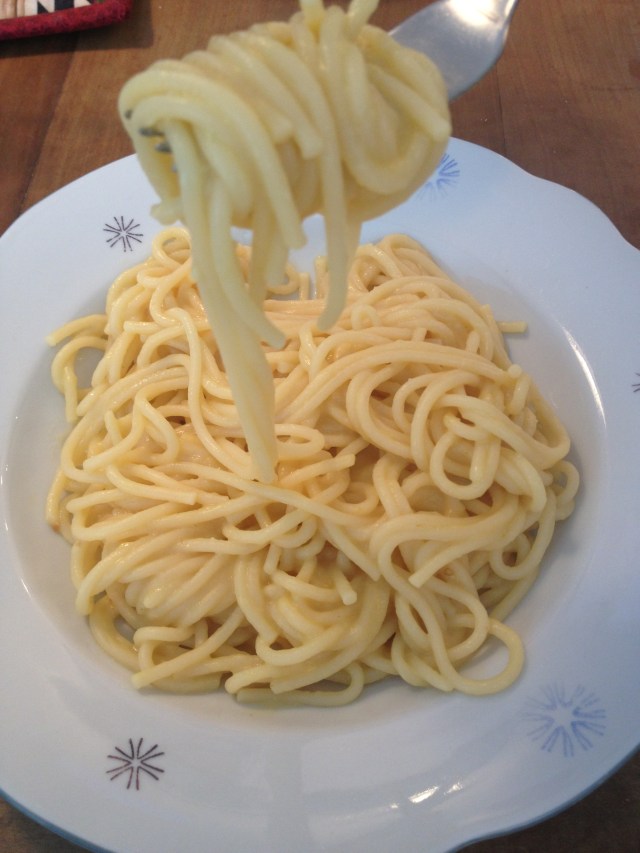
Monograno Felicetti (somewhat ticker than ordinary spaghetti) with a homemade sauce made from yellow San Marsano tomatoes by my gourmet husband.
The plate is made in East Germany, probably some time in the 1950s, and used to belong to my maternal grandmother, who was born in 1900. (I am not sure if the date is based on someone’s actual recollection of her buying the dinner set or if everyone just thinks this was the first time she was able to afford one, what with the world wars, Weimar Republic and the Great Depression she lived through before that.)
After my grandmother died, the dinner set was divided among various family members, and when I first set out to live on my own roughly a decade later, I got some of the plates. Another decade and a few international moves later, my now-husband mentioned that he preferred these plates to our other dishes. Somehow, word got around, and I’m not sure whether people just saw this as an opportunity to make room in their kitchens or were thrilled that this strange American their niece and cousin had married liked grandma’s dinner set — at any rate, people started giving us their dishes: deep plates, and small plats, and large plates, and bowls and tureens.
I like to think about the fact that these dishes were never meant to experience most of the meals my husband prepares, just as I was not meant to experience the many countries I’ve seen and things I have done in the twenty-odd years since the wall fell. I wonder if the plates whisper to each other about it all as they sit in the drawer, waiting for the next meal.




 Walking the cat